Facial massage is the use of your hands, or sometimes a simple tool, to glide, press, and knead the soft tissue of the face and neck. People usually try it for one of three reasons: to relax a tight jaw or forehead, to temporarily soften morning puffiness, or simply because it feels good.
The useful effects are usually modest and temporary. That does not make the ritual pointless. It just makes it something gentler than the dramatic before-and-after promises online.
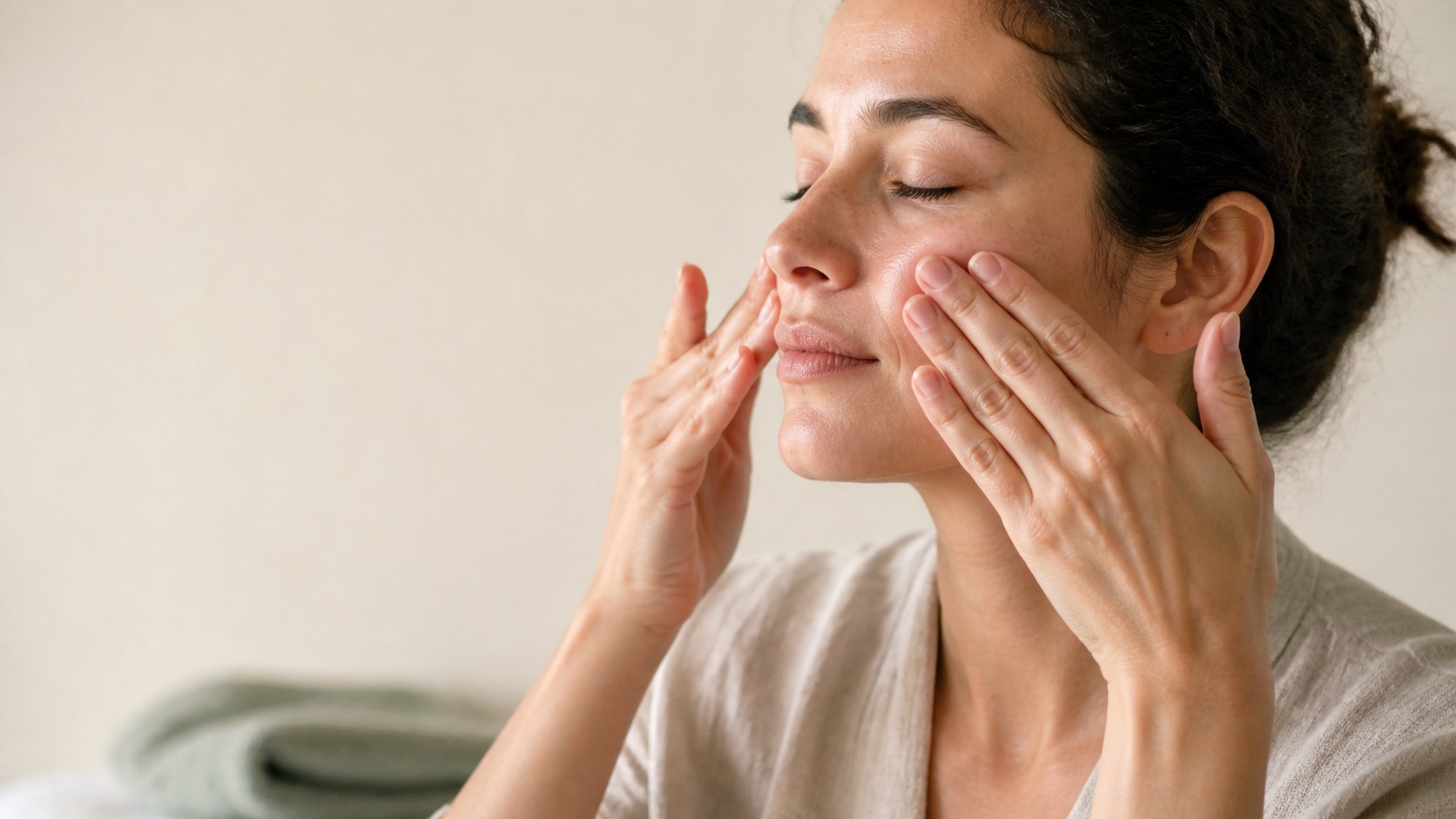
Short answer: Facial massage can help your face feel more relaxed and may temporarily reduce mild puffiness or increase local skin blood flow. It is unlikely to permanently lift the face, erase wrinkles, "detox" the skin, or create lasting structural change.
At a glance
- Best for: relaxation, a tight-feeling jaw or brow, and mild temporary puffiness
- Time: about 5 minutes
- Pressure: comfortable and controlled, never painful
- Tools: optional; clean hands are enough
- Results: usually subtle and short-lived
What is facial massage, exactly?
Facial massage is deliberate touch applied to the face, jaw, and often the neck. Depending on the goal, that might mean slow circular movements over the temples, gentle kneading along the jaw, or feather-light sweeps intended to move superficial fluid.
It is not the same as a full facial treatment, which may also include cleansing, exfoliation, masks, or extractions. Here, the focus stays on hands-only massage while the face remains relaxed.
Two useful types of at-home facial massage
There are many named techniques, but for a simple at-home routine it helps to think in two broad buckets:
- General relaxation massage: comfortable circular, kneading, or outward movements around the temples, cheeks, forehead, and jaw. The goal is usually to make a tight-feeling face feel calmer.
- Lymphatic drainage massage: very light, directional strokes intended to guide superficial fluid toward drainage pathways around the ears, neck, and collarbone. This approach is more specifically associated with temporary de-puffing. See the complete facial lymphatic drainage guide for the full explanation and sequence.
Most casual routines borrow from both. The distinction matters because the pressure and purpose are different. A jaw massage can feel satisfyingly firm. Lymphatic strokes should feel much lighter.

General massage often uses circular or kneading movements. Lymphatic drainage uses much lighter strokes directed outward across the face and down the neck.
How does facial massage work?
Facial massage does not rely on one magical mechanism. A few ordinary things may be happening at once:
It may move a small amount of superficial fluid
Very light, correctly directed strokes may help move excess fluid through superficial lymphatic pathways. That is why a lymphatic-style routine can make mild morning puffiness look less noticeable for a while. It is not a treatment for unexplained or persistent swelling.
Touch can make tense areas feel more relaxed
If you have ever caught yourself clenching your teeth while answering email, you already know what facial tension feels like. Slowly working around the jaw, brow, and temples will not fix the reason you clench, but it may help those areas feel less wound up.
Local blood flow may increase briefly
A small study found that five minutes with a facial roller increased skin blood flow in the massaged cheek for at least ten minutes. It included only 12 people in this part of the study, so it supports a modest short-term effect, not a sweeping claim about skin health. Read the study on PubMed.
The pause itself can be useful
Five quiet minutes with your phone out of reach is not a biological facelift, but it can still be a useful part of a routine. Facial massage does not need to behave like a cosmetic procedure to earn a place in your evening.
Which facial massage benefits are supported?
Research specific to cosmetic facial massage is still limited. A recent systematic review found only a small number of manual-massage studies and noted that the evidence for facial rejuvenation remains sparse. Read the systematic review.
| Claim | The honest answer |
|---|---|
| Relaxation and a less tight-feeling face | Reasonable to expect as a short-term, subjective effect. |
| Less mild puffiness | Possible, especially with very light lymphatic-style strokes. The effect is temporary and varies by person and by the cause of the puffiness. |
| Increased circulation | A small study supports a brief, local increase in skin blood flow. That is not the same as a lasting change in how the skin functions. |
| A brighter or more rested look | Possible immediately afterward because of temporary changes in fluid, muscle tension, and blood flow. |
| Permanent lifting or facial sculpting | Not established. A temporary change in puffiness can alter how facial contours look, but it does not reposition tissue permanently. |
| Wrinkle removal or increased collagen | Strong, lasting effects have not been established by good-quality evidence. Massage should not replace sunscreen or evidence-based skincare. |
| Detoxification | Misleading language. Your lymphatic system, liver, and kidneys handle waste; massage does not pull toxins out through the skin. |
Does facial massage actually work?
It can work for modest goals. Your jaw may feel less clenched. Your face may look a little less puffy. Your skin may feel warm for a short time. Those are useful outcomes if they are what you wanted.
It does not work like a facelift, injectable treatment, or medical therapy, and it should not be judged against those promises. The most trustworthy before-and-after comparison is one taken in the same light, at the same angle, immediately before and shortly after a single session. Even then, expect subtlety rather than transformation.

What should facial massage feel like?
The right pressure depends on the technique, but it should always feel controlled and comfortable.
- For general relaxation massage, use enough pressure to engage the soft tissue without causing pain, bruising, or pressure on your teeth.
- For lymphatic drainage, use a much lighter touch. The lymphatic vessels involved are superficial, so pressing harder is not more effective. Cleveland Clinic also recommends very light, gentle pressure for lymphatic self-massage. See its technique guidance.
- Around the eyes, use minimal pressure and stay on the bony eye socket rather than pressing on the eye itself.
Clean hands are enough. A moisturizer or light facial oil can add glide if your fingers tug at dry skin. Choose something your skin already tolerates rather than introducing a new, heavily fragranced product just for massage.
If you want to try a complete hands-only sequence, follow the five-minute beginner facial massage routine.
Is facial massage safe?
It is generally low-risk when the pressure is gentle, but there are times to pause.
Skip massage over open wounds, sunburn, active infection, or severely irritated skin. If you have had fillers, Botox, surgery, or another facial procedure, follow your provider's aftercare instructions. Unexplained swelling, a new lump, or lymph nodes that stay enlarged should be assessed rather than repeatedly massaged.
Stop if you feel pain or develop bruising, stinging, or redness that does not settle. For more detail, see Is Facial Massage Safe? Side Effects and How Often to Do It.
Facial massage FAQ
Does facial massage actually work?
It can help your face feel more relaxed and may temporarily reduce mild puffiness or increase local blood flow. Evidence does not support permanent lifting, wrinkle removal, or structural facial change.
What is the difference between facial massage and lymphatic drainage massage?
General facial massage often uses comfortable circular, kneading, or outward movements to ease a tight-feeling jaw, brow, or temples. Lymphatic drainage uses much lighter, directional strokes intended to move superficial fluid toward drainage pathways around the ears, neck, and collarbone.
Do I need facial oil or a special tool?
No. Clean hands are enough. If your fingers tug at your skin, use a moisturizer or light facial oil that your skin already tolerates. A tool may change how the movement feels, but it is not required for an effective routine.
Can facial massage permanently lift the face or remove wrinkles?
There is not strong evidence that facial massage permanently lifts facial tissue or removes wrinkles. A temporary reduction in puffiness may make the face look more defined, but that is different from lasting structural change.
How long and how often should I massage my face?
Five minutes is enough for a simple routine. A few sessions a week is a practical starting point, and daily massage may be comfortable for some people. More is not automatically better. Reduce the pressure or frequency if your skin becomes irritated.
Who should avoid facial massage?
Avoid it over broken, infected, sunburned, or severely irritated skin. Ask your healthcare provider for guidance after facial procedures or if you have a diagnosed lymphatic condition. Persistent or unexplained facial swelling needs assessment rather than a beauty routine.
Where to start
Choose the guide that matches what you actually want:
- For a relaxed, hands-only routine, use the beginner facial massage tutorial.
- For mild puffiness, start with the facial lymphatic drainage guide.
- If sinus pressure is the concern, read facial massage for sinus relief and pay attention to the signs that need medical care.
We're building MyFaceRitual as a short, guided course that teaches a complete routine step by step. You can join the waitlist, or read how to choose a facial massage course if you are comparing your options.