If you wake up with mild, even puffiness around your eyes or cheeks, a few minutes of very gentle facial massage may help it settle. The key word is gentle: this is a light skin-stretching technique, not a workout for your jaw and not a way to permanently sculpt your face. Some people notice a temporary difference. Others mostly notice that the routine feels calming.
This guide shows you a five-minute, hands-only routine for cosmetic puffiness. It is not a treatment plan for lymphedema or unexplained facial swelling. New to facial massage generally? Start with What Is Facial Massage?, and read the full facial massage safety guide before your first session.
The short answer: does facial lymphatic drainage massage work?
Gentle facial lymphatic massage may temporarily reduce mild, fluid-related puffiness for some people, but direct research on cosmetic facial massage in otherwise healthy people is limited. It has not been shown to permanently lift the face, remove fat, erase wrinkles, or change facial structure.
Manual lymphatic drainage is better established as part of care for some people with lymphedema, which is a medical condition and not the same thing as waking up a little puffy. Even there, research findings are mixed. A small randomized trial of people recovering from jaw surgery found no statistically significant difference in swelling between those who received manual lymphatic drainage and those who did not. That does not prove the technique never helps, but it is a good reason to avoid guaranteed results. See the published trial on postoperative facial swelling.
| Claim | What the evidence supports | Practical takeaway |
|---|---|---|
| Temporary improvement in mild puffiness | Possible, but direct cosmetic evidence is limited | You may notice a short-lived change, or you may not |
| A permanently slimmer or lifted face | Not established | A less puffy face can look more defined temporarily, but its structure has not changed |
| Wrinkle removal or collagen building | Not established for this routine | Treat those claims as marketing, not a reason to massage |
| Relaxation | Plausible and commonly experienced with gentle touch | Feeling calmer is a valid benefit, even without a visible change |
How is it different from ordinary facial massage?
The lymphatic vessels near the skin are superficial. That is why this routine uses slow, rhythmic contact that gently stretches and releases the skin. It should not reach into the muscles or feel like kneading.
Ordinary facial massage may use circles, gliding strokes or firmer pressure for a tight-feeling jaw or brow. Lymphatic self-massage is lighter and follows a deliberate route from the face toward areas in front of the ears, then down the sides of the neck toward the collarbone region.
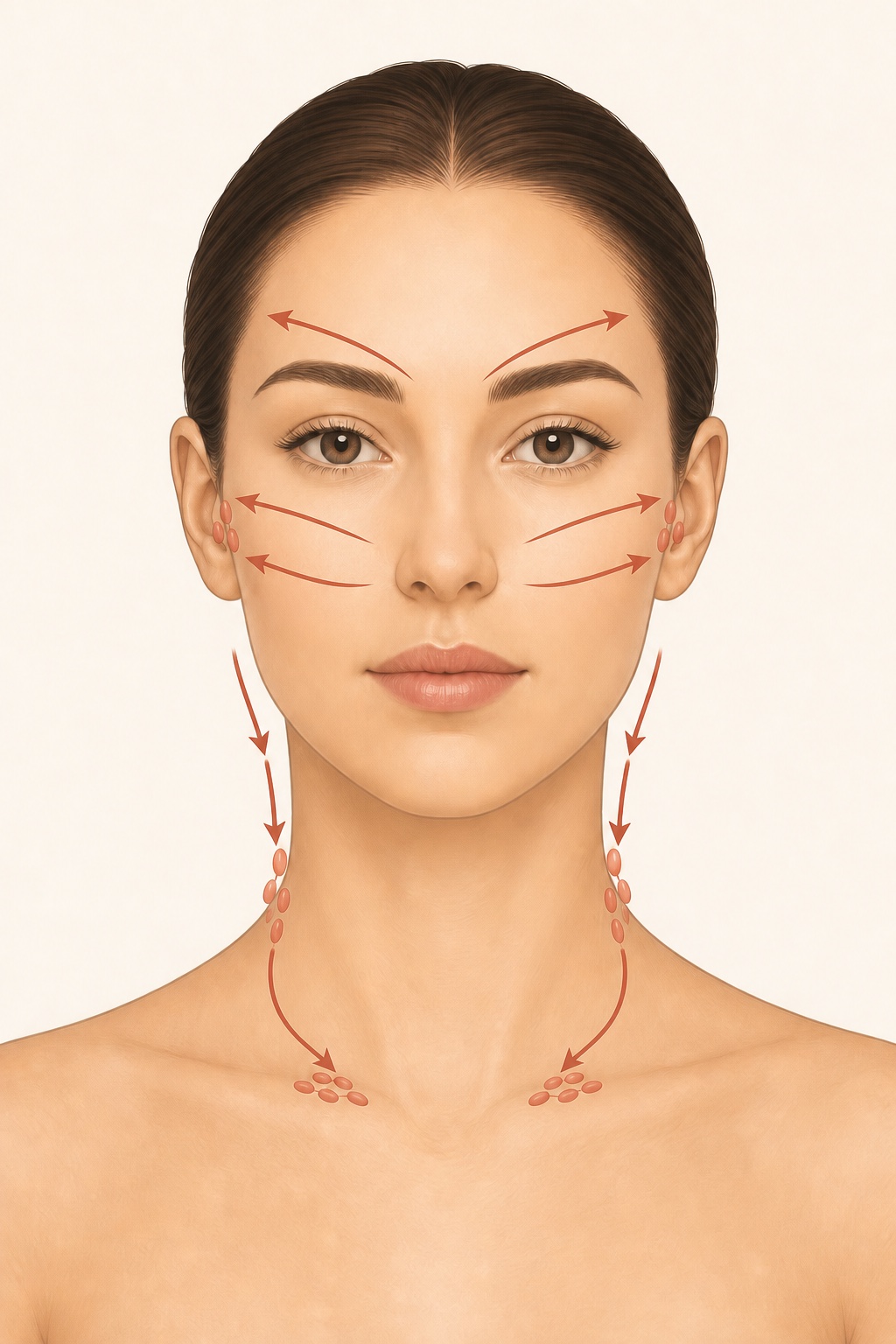
The illustration is a simplified route for someone with an intact lymphatic system. Surgery, cancer treatment, radiation or diagnosed lymphedema can change where fluid should be directed. In those situations, use the route taught by your clinician or certified lymphedema therapist instead.
How light should the pressure be?
Use only enough pressure to move the skin slightly beneath your fingertips. Then release it. You are not sliding over the skin, pressing into muscle or trying to force fluid through the face.
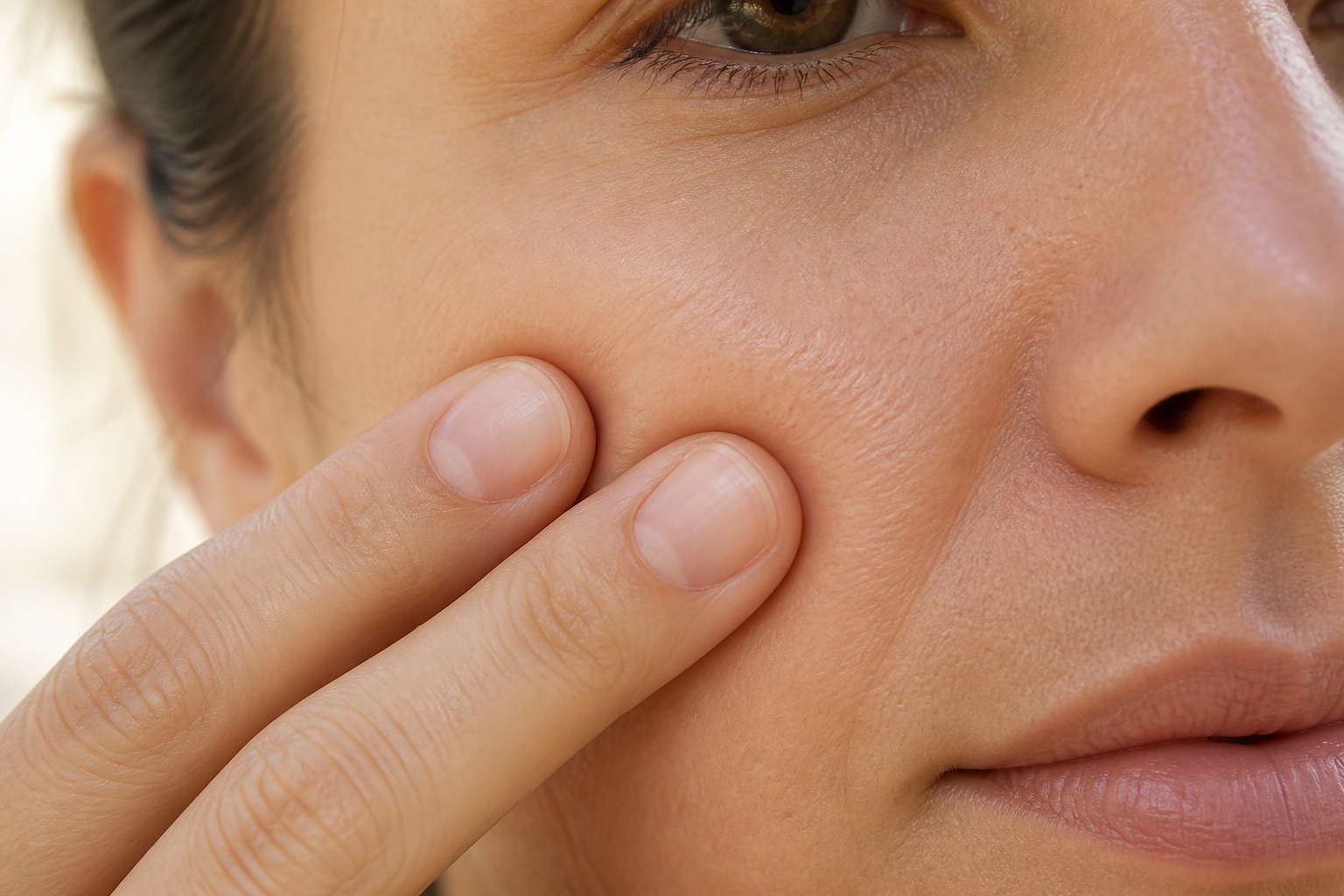
A useful check is what happens afterward: correct pressure should not hurt, leave your skin red or make the area feel tender. If your fingertips are skimming across the surface, slow down. If they are digging in, go lighter.
Clean, dry skin usually gives your fingers enough grip for this small skin-stretching movement. You do not need facial oil. Too much slip can turn the movement into an ordinary gliding massage. If your skin feels irritated or uncomfortable without a product, stop rather than adding pressure or friction.
Who should not do facial lymphatic massage?
Do not use a cosmetic routine to investigate or treat swelling you cannot explain. Skip the massage and seek appropriate medical advice if you have:
- Sudden, painful, persistent or one-sided facial swelling
- Trouble breathing, weakness, fever, eye symptoms, severe headache or dental pain with the swelling
- An active infection, cellulitis, fever or acute illness
- A known blood clot or deep vein thrombosis
- Significant heart disease or kidney failure
- Cancerous tissue in the area or skin damaged by radiation treatment
- Broken, sunburned, severely irritated or painfully inflamed skin
- Swollen lymph nodes that are persistent or unexplained
Ask the clinician who treated you before massaging after facial surgery, dental surgery, fillers, Botox or other procedures. If you have lymphedema or another diagnosed lymphatic condition, learn self-massage from your healthcare team because your safe drainage route may be different.
Pregnancy alone does not automatically rule out feather-light facial massage. However, sudden swelling during pregnancy, especially with headache, vision changes, pain or high blood pressure, needs prompt medical advice rather than a beauty routine.
For a broader contraindication list, see Cleveland Clinic's lymphatic drainage guidance.
Before you begin
- Wash and dry your hands.
- Start with clean, comfortable skin.
- Sit upright with your shoulders relaxed and your teeth unclenched.
- Remove anything tight around your neck.
- Keep every movement slow, light and pain-free.
- Stop if you feel dizzy, unwell, increasingly swollen or irritated.
This routine should take about five minutes. There is no prize for turning it into twenty.
How to do facial lymphatic drainage massage step by step
1. Begin with five slow breaths
Rest your hands on your abdomen. Breathe in slowly through your nose and let your abdomen expand. Breathe out gently and let it soften. Repeat five times without forcing the breath.
Clinical self-drainage routines often begin with diaphragmatic breathing and the neck or collarbone region before moving to the face. The NHS head-and-neck self-massage guide demonstrates this order.
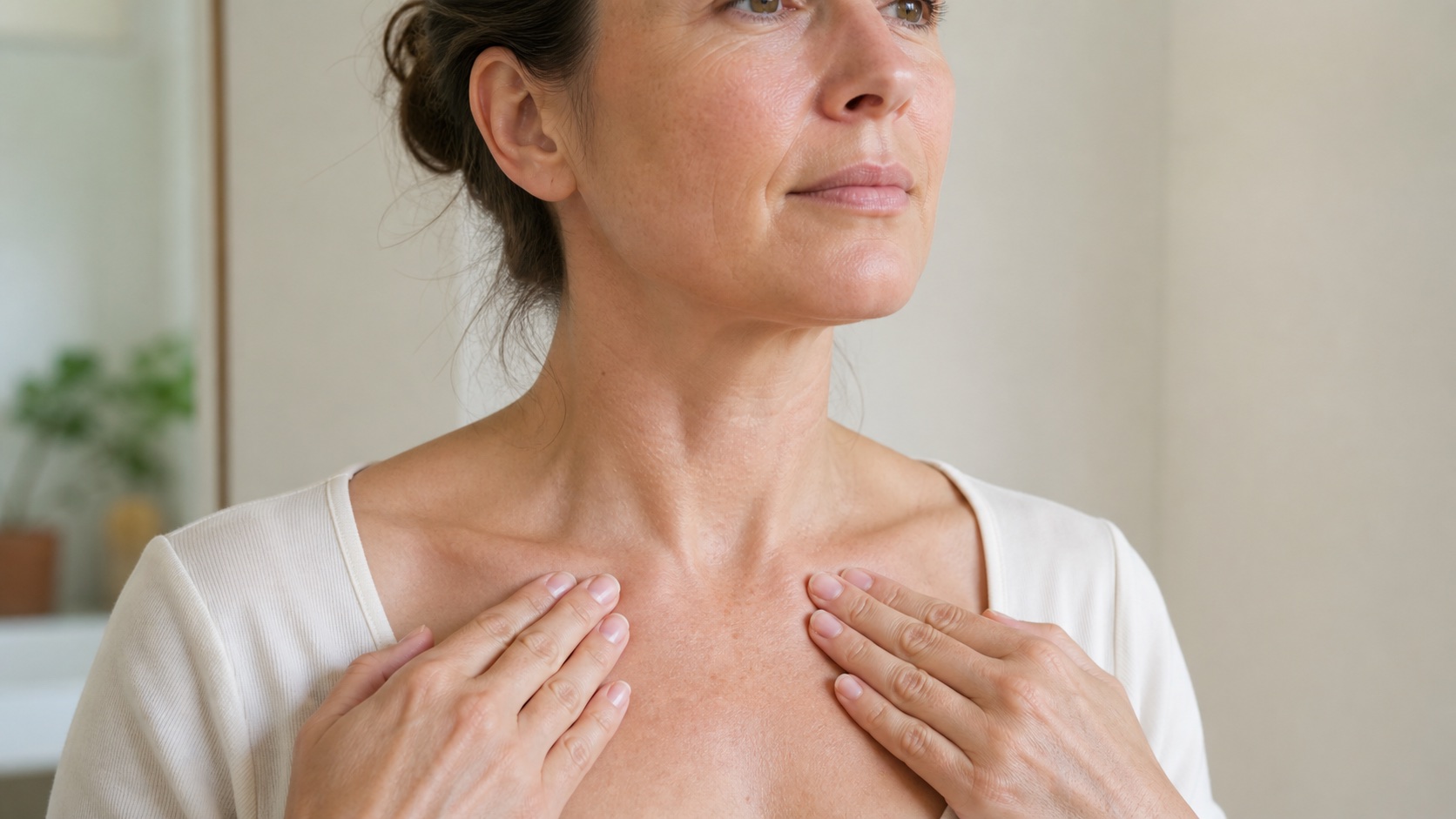
2. Prepare the area above your collarbones
Place the flat pads of your index and middle fingers in the soft hollows immediately above your collarbones. Keep them away from the front of your throat.
Gently stretch the skin down and slightly inward, making a small J-shaped movement, then release completely. Repeat 10 times. Your fingers should stay above the collarbones rather than sweeping out toward your shoulders.
3. Move down the sides of your neck
Place flat fingers just below your ears. Gently stretch the skin back and down, then release. Work down the side of the neck in two or three positions until you reach the collarbone area. Repeat each position five times.
Do not press on the center or front of your throat.
4. Work from the jaw and cheeks toward the ears
With your jaw relaxed, place your fingertips near the center of your chin. Gently stretch the skin outward along the jaw toward the area just in front of the ear, then release. Repeat five times.
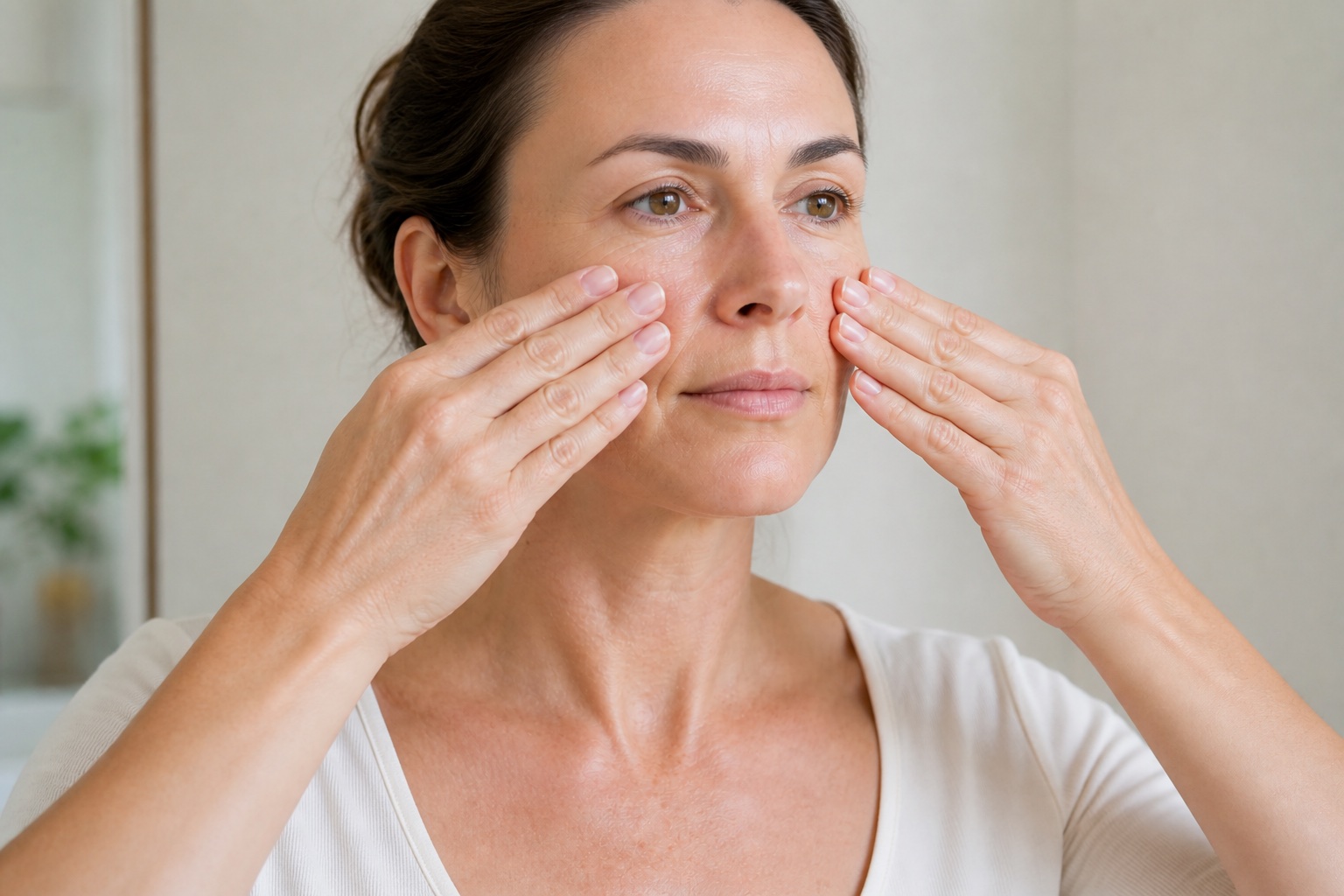
Move to the sides of your nose and cheeks. Use the same light stretch-and-release action toward the ears. Repeat five times. The easy mistake here is to turn the movement into a long, oily glide. Keep it small, slow and superficial instead.
5. Move around the eyes and forehead
Around the eyes, use one or two fingertip pads and even less pressure. Stay on the bony rim around the eye rather than pressing the eyeball or dragging the lower eyelid. Gently work from the inner under-eye area outward toward the temple three to five times.
For the forehead, begin near the center and gently stretch outward toward each temple. Repeat five times per side.
6. Guide the route down and finish where you started
Return to the area in front of your ears. Repeat the light movements down the sides of the neck, then finish with 10 small J-shaped movements immediately above the collarbones.
One careful pass is enough. More pressure, more repetitions and a longer session do not guarantee a better result.
What should you expect afterward?
Your face may feel relaxed, and mild puffiness may look a little less noticeable. The result, if you see one, is likely to be temporary. It is also normal to see no obvious visual change.
Stop and reassess if your skin becomes red, sore or more swollen. Persistent facial swelling, or swelling that keeps returning without a clear everyday cause, deserves medical or dental assessment rather than a more aggressive massage.
How often can you do it?
There is no established evidence-based schedule for cosmetic facial lymphatic massage. Start with one short session and see how your skin responds. If it remains calm and the routine feels helpful, you can repeat it occasionally. Daily treatment is not necessary, and more is not automatically better.
If morning puffiness is your main concern, use the shorter facial massage for puffiness routine. If pressure or congestion around your sinuses is the issue, remember that massage does not treat an infection or allergy; start with the safety notes in facial massage for sinus pressure.
Do you need a tool?
No. Clean hands are enough, and they make it easier to feel how little pressure you are using. A tool is not required to move more fluid or make the routine more effective.
Frequently asked questions
Can facial lymphatic drainage permanently sculpt your face?
No lasting structural change has been established. Temporarily reducing mild puffiness can make existing contours look a little clearer, but it does not remove fat or permanently lift tissue.
Can you do facial lymphatic drainage every day?
There is no established ideal frequency for a cosmetic routine. Daily massage is unnecessary. Begin occasionally and reduce the frequency or stop if your skin becomes irritated, sore or more swollen.
Should you use oil for lymphatic facial massage?
Usually not. This technique relies on gently stretching and releasing the skin rather than sliding over it, and excess oil can create too much slip.
When should you see a professional?
Seek medical or dental advice for sudden, painful, persistent or one-sided swelling, or swelling accompanied by other symptoms. Work with your healthcare team or a certified lymphedema therapist if you have diagnosed lymphedema, altered lymph nodes, or a history of surgery, radiation or cancer treatment in the area.
A guided routine is coming
Reading the steps is one thing. Seeing the pace, pressure and hand placement makes them much easier to understand. We are building MyFaceRitual to turn careful facial massage guidance into short routines you can actually follow. Join the waitlist to hear when the first guided routine is ready.
Sources and review note
This article is general education, not individualized medical advice. It was written using patient guidance from the West Suffolk NHS Foundation Trust, current contraindication guidance from Cleveland Clinic, and published research indexed by PubMed. The simplified illustration is educational and does not replace a route prescribed for lymphedema or altered lymphatic anatomy.