Some mornings, your face simply looks softer and puffier than it did the night before, especially around the eyes and cheeks. A salty meal, poor sleep, allergies, or lying flat can all play a part. If the puffiness is mild, even, and painless, a few minutes of very gentle massage may help it settle. The touch should feel almost surprisingly light.
The short answer: gentle facial massage may temporarily soften mild, fluid-related morning puffiness for some people. It will not remove fat or permanently sculpt your face. Begin at the neck and collarbone area before working on the face, and do not massage sudden, painful, persistent, or one-sided swelling.
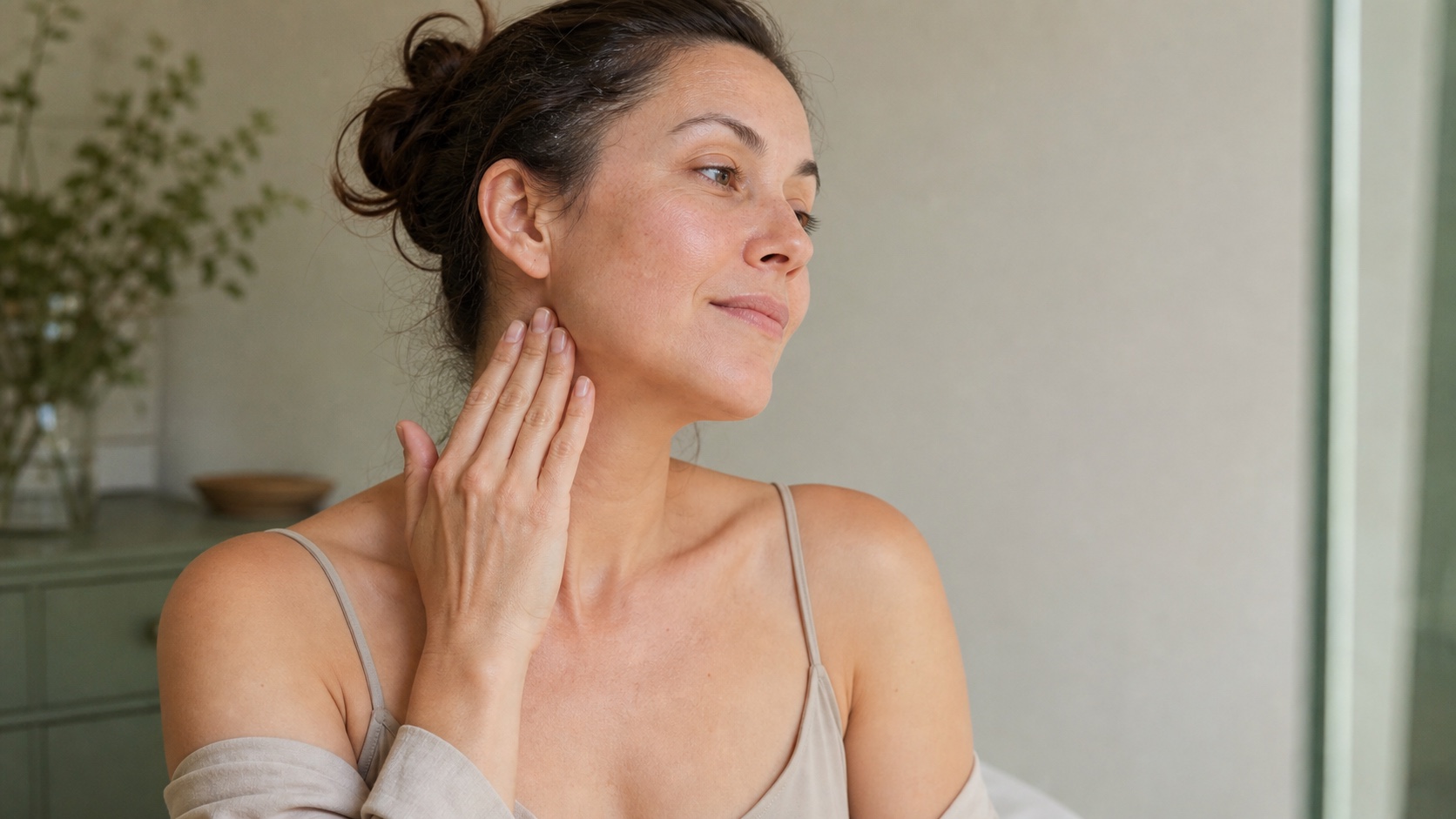
Is it ordinary morning puffiness or facial swelling?
This routine is for the familiar, temporary puffiness that can appear after sleep and usually improves as you get upright and move through your morning. It is not a treatment for edema, lymphedema, an allergic reaction, an infection, or swelling after a medical or cosmetic procedure.
| Mild morning puffiness | Swelling that needs medical or dental advice |
|---|---|
| Soft, even, and painless | Sudden, painful, hot, red, or mainly on one side |
| Often most noticeable around both eyes or cheeks | Involves the lips or tongue, or comes with hives |
| Starts improving after you get upright | Persists, keeps returning without a clear reason, or becomes worse |
| No other symptoms | Comes with fever, dental pain, eye pain, vision changes, weakness, or severe headache |
Trouble breathing or swallowing with facial swelling can be an emergency. Seek urgent help rather than trying massage. For a fuller explanation of red flags, read the facial massage safety guide or Cleveland Clinic's guide to facial swelling.
Why does your face look puffy in the morning?
Morning puffiness is often a temporary shift in fluid rather than a change in your facial structure. Several everyday factors can overlap:
- Sleep position. Lying flat can make fluid more noticeable around the thin skin beneath the eyes.
- Salt, alcohol, and sleep quality. These can affect fluid balance or make morning puffiness more noticeable, although the response varies from person to person.
- Allergies or congestion. These often show up around the eyes and nose. If pressure and congestion are the main problem, start with facial massage for sinus pressure.
- Normal hormonal changes. Some people notice that puffiness varies across their cycle.
Massage cannot tell you what caused swelling. If you are not sure that what you see is ordinary morning puffiness, pause and ask a healthcare professional.
Before you begin
- Wash and dry your hands.
- Sit upright, lower your shoulders, and unclench your teeth.
- Use clean, comfortable skin. This light stretch-and-release technique usually does not need oil.
- Use only enough pressure to move the skin slightly. Do not knead the muscles or drag the skin.
- Stay off the front of your throat and press only on the bony rim around the eye, never the eyeball or mobile lower eyelid.
- Stop if the massage hurts, irritates your skin, makes the swelling worse, or leaves you feeling unwell.
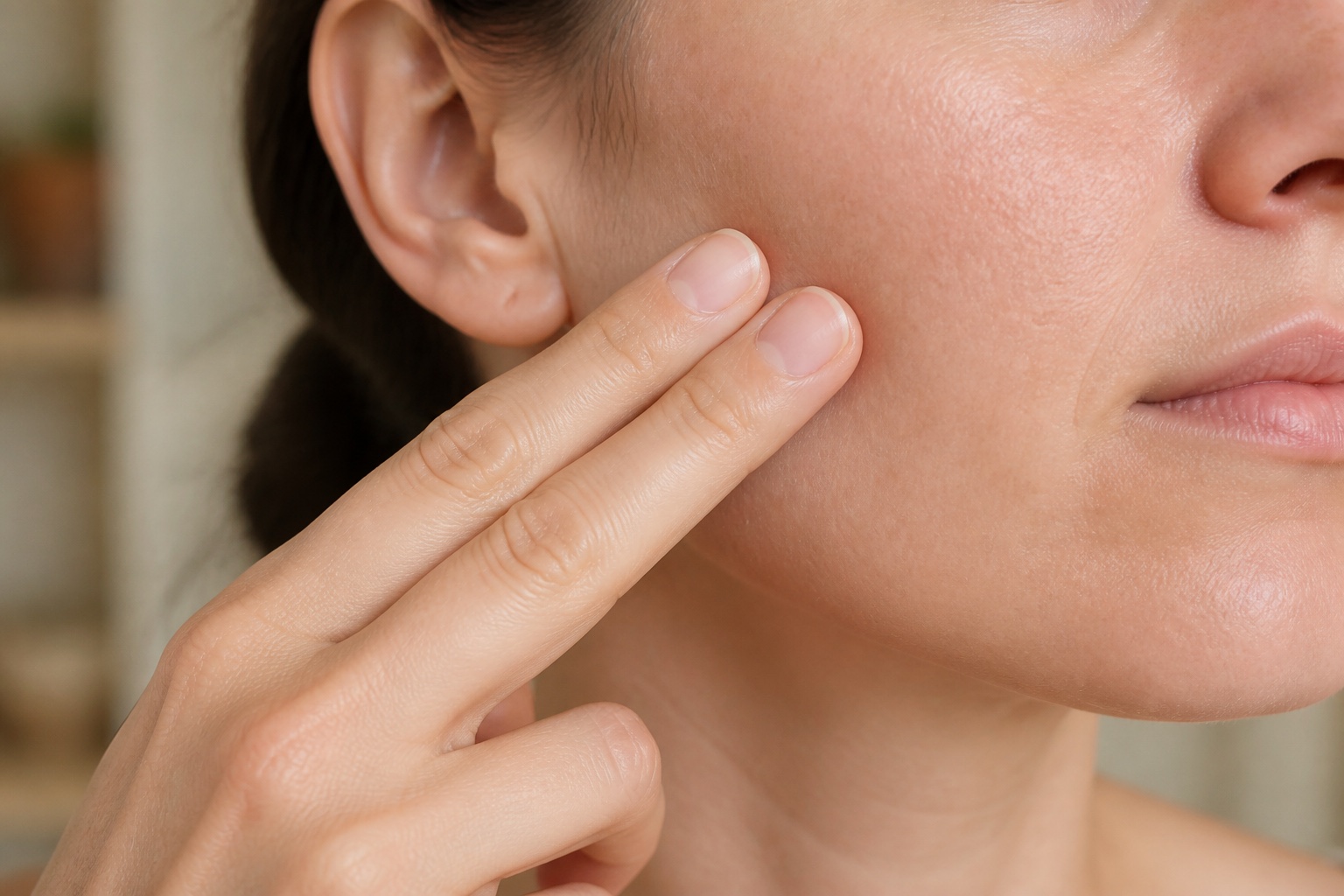
A gentle 5-minute facial massage for puffiness
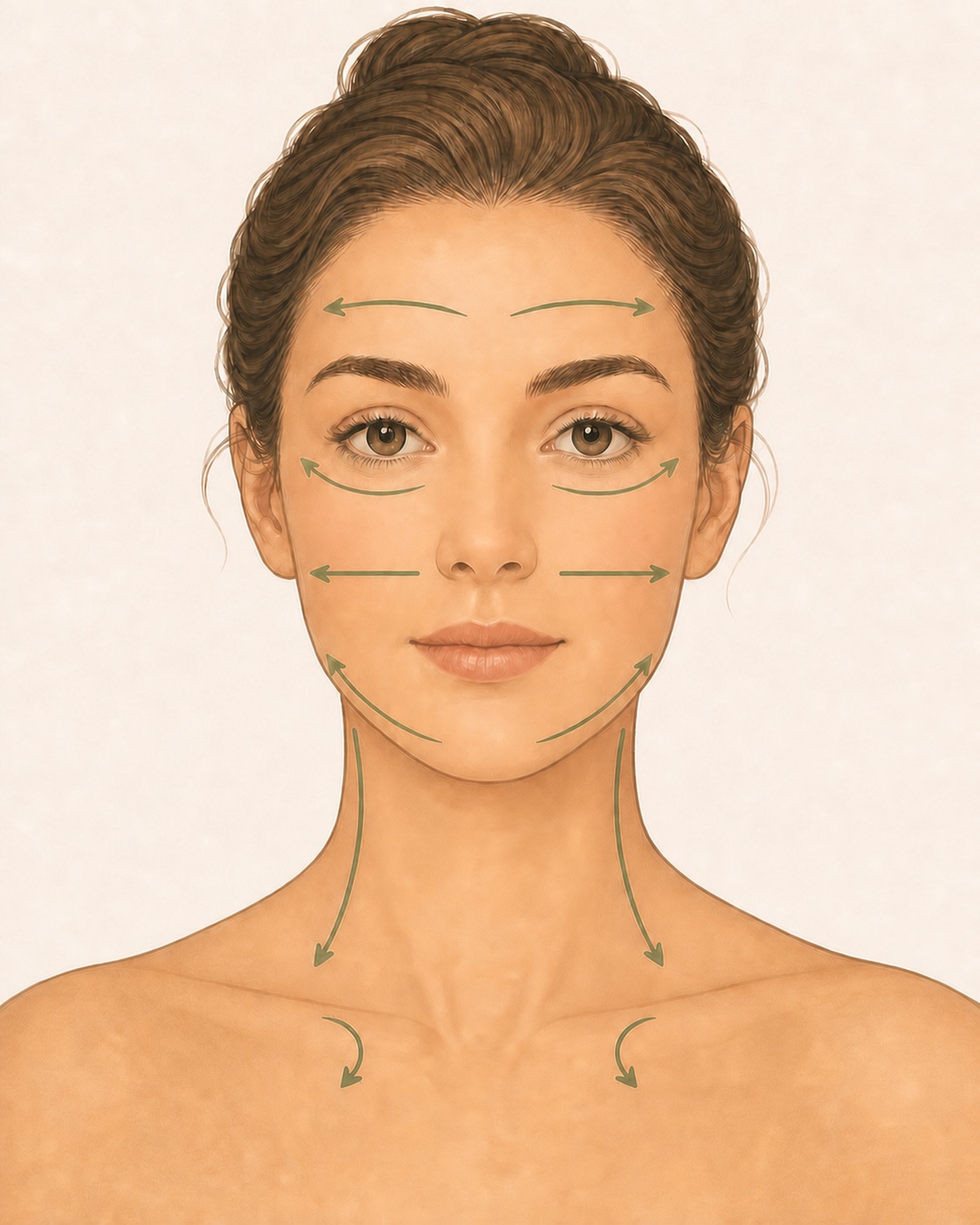
This is a shortened version of the complete facial lymphatic drainage routine. It keeps the important order: prepare the area near the collarbones and neck first, work on the face, then finish down the neck.
1. Settle your breathing (30 seconds)
Rest your hands on your abdomen. Take three or four slow, comfortable breaths through your nose. Let your abdomen expand as you breathe in and soften as you breathe out. There is no need to force a deep breath.
2. Prepare the collarbone area (45 seconds)
Place the flat pads of two fingers in the soft hollows immediately above your collarbones, away from the front of your throat. Gently stretch the skin down and slightly inward in a small J-shaped movement, then release completely. Repeat about 10 times.
This is a small skin movement, not a long sweep from the center of your chest toward your shoulders.
3. Move down the sides of your neck (45 seconds)
Place flat fingers just below your ears. Gently stretch the skin back and down, then release. Work down the side of your neck in two or three positions until you reach the collarbone area. Repeat each position about five times.
4. Work along the jaw and cheeks (1 minute 15 seconds)
With your jaw relaxed, place your fingertips near the center of your chin. Use a small, light stretch-and-release movement outward along the jaw toward the area in front of the ear. Repeat five times.
Move to the sides of your nose and cheeks. Repeat the same gentle movement toward the ears. If your fingers are sliding quickly over the surface or digging into the cheek, reset with less pressure.
5. Work around the eyes and forehead (1 minute)
Use one or two fingertip pads and even less pressure. Stay on the bony rim beneath the eye. Begin near the inner under-eye area, away from the eyeball, and work gently toward the temple three to five times.
For the forehead, begin near the center and make the same small outward movement toward each temple. Keep your brow relaxed.
6. Finish down the neck (45 seconds)
Return to the area in front of your ears. Repeat the light stretch-and-release movements down the sides of the neck, then finish with the small J-shaped movements immediately above the collarbones.
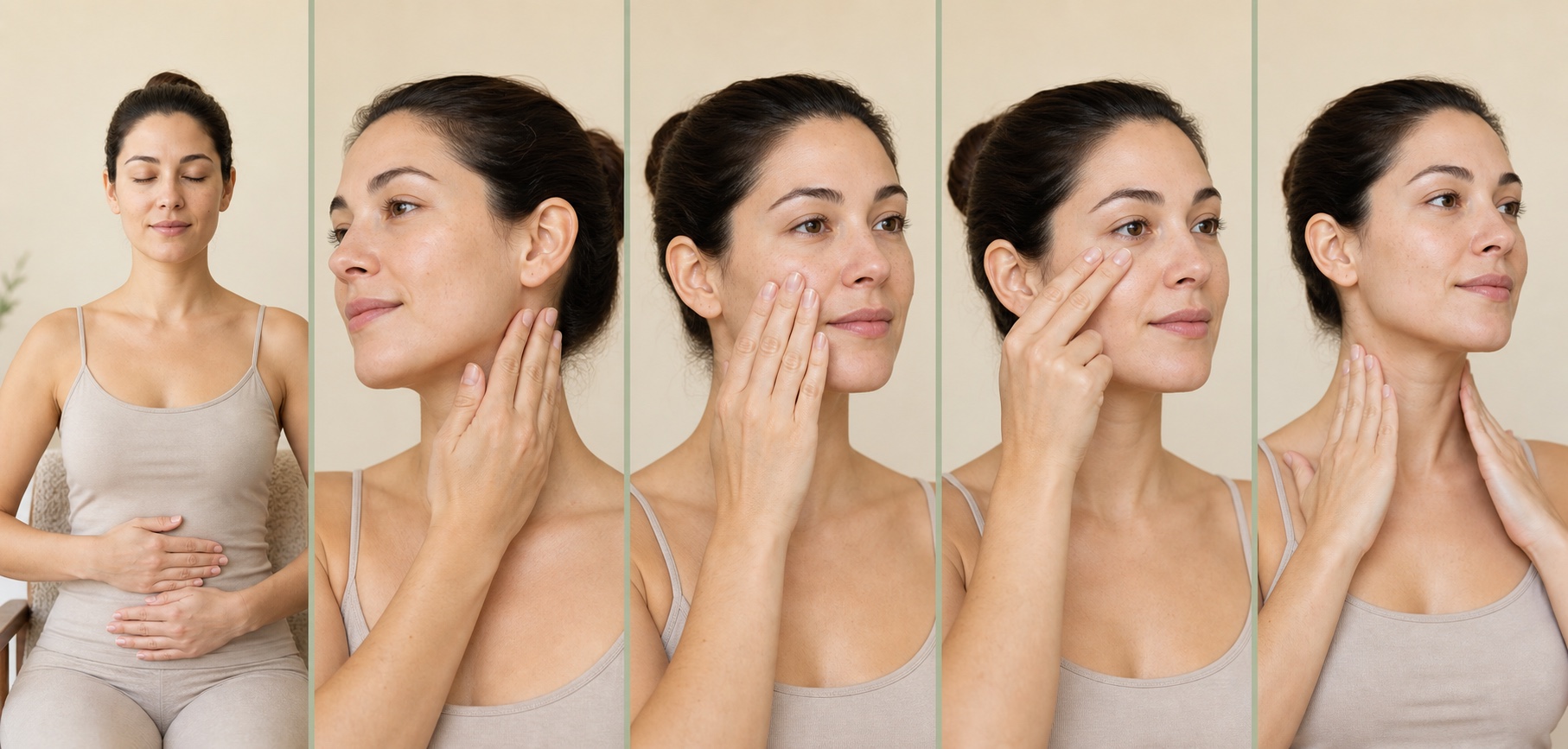
One careful pass is enough. More pressure, more repetitions, and a second session do not guarantee a better result.
What should you expect afterward?
Your face may feel more relaxed, and mild puffiness may look a little less noticeable. It is also completely normal to see no obvious change. Direct research on cosmetic facial massage in otherwise healthy people is limited, so there is no reliable promise for how much improvement you will see or how long it will last.
Manual lymphatic drainage is used clinically for some lymphatic conditions, but that is not the same as treating everyday cosmetic puffiness. A small randomized trial after jaw surgery found no statistically significant reduction in swelling from manual lymphatic drainage. That does not prove no one benefits, but it is a useful reminder to keep expectations modest. See the published postoperative study.
What else may help morning puffiness?
- A cool washcloth. Rest it over closed eyes briefly. Keep ice and frozen tools off bare skin.
- Getting upright and moving. Ordinary morning puffiness often improves as your day begins.
- Sleeping with your head slightly elevated. This may help if puffiness regularly gathers around your eyes.
- Addressing the cause. Massage does not treat allergies, a sinus or dental infection, medication effects, or an underlying health condition.
You do not need a special roller, gua sha tool, or expensive serum for this routine. Clean hands are enough.
Frequently asked questions
Does facial massage actually reduce puffiness?
It may temporarily soften mild, fluid-related puffiness for some people, but cosmetic evidence is limited and results vary. It does not remove facial fat or permanently change facial structure.
How light should the pressure be?
Use only enough pressure to move the skin slightly beneath your fingertips. You should not feel the muscles being kneaded, and the skin should not hurt or remain red afterward.
Can I do this massage every morning?
There is no established ideal schedule for cosmetic facial massage. Start occasionally and pay attention to how your skin responds. Daily massage is unnecessary, and more is not automatically better.
Should I use facial oil?
Usually not for this light stretch-and-release technique. Clean, dry skin often gives your fingers enough grip. If your skin feels irritated or uncomfortable, stop instead of adding pressure or friction.
When should I skip facial massage?
Skip it for sudden, painful, persistent, hot, red, or one-sided swelling, active infection, broken or severely irritated skin, or unexplained swollen lymph nodes. Ask your treating clinician before massage after facial or dental surgery, fillers, Botox, cancer treatment, or radiation, and if you have diagnosed lymphedema or altered lymph nodes.
A guided routine is coming
Reading hand placement is one thing. Seeing the pace and pressure makes a gentle routine much easier to follow. We are building MyFaceRitual to turn careful facial massage guidance into short routines you can use at home. Join the waitlist to hear when the first guided routine is ready.
Sources and review note
This article is general education, not individualized medical advice. It was written using facial self-massage guidance from University Health Network, self-massage and contraindication guidance from Cleveland Clinic, facial-swelling information from Cleveland Clinic, and published research indexed by PubMed. The routine and illustrations are simplified for mild cosmetic puffiness in someone with an intact lymphatic system. Follow your clinician's route instead if surgery, radiation, cancer treatment, or diagnosed lymphatic disease has altered your anatomy.