When your cheeks and forehead feel full and tender, the instinct is often to press harder. Resist it. If massage feels helpful, the safest version is slow, light, and brief. Think fingertip contact, not deep tissue work. Some people notice a few minutes of comfort. Others notice no change at all.
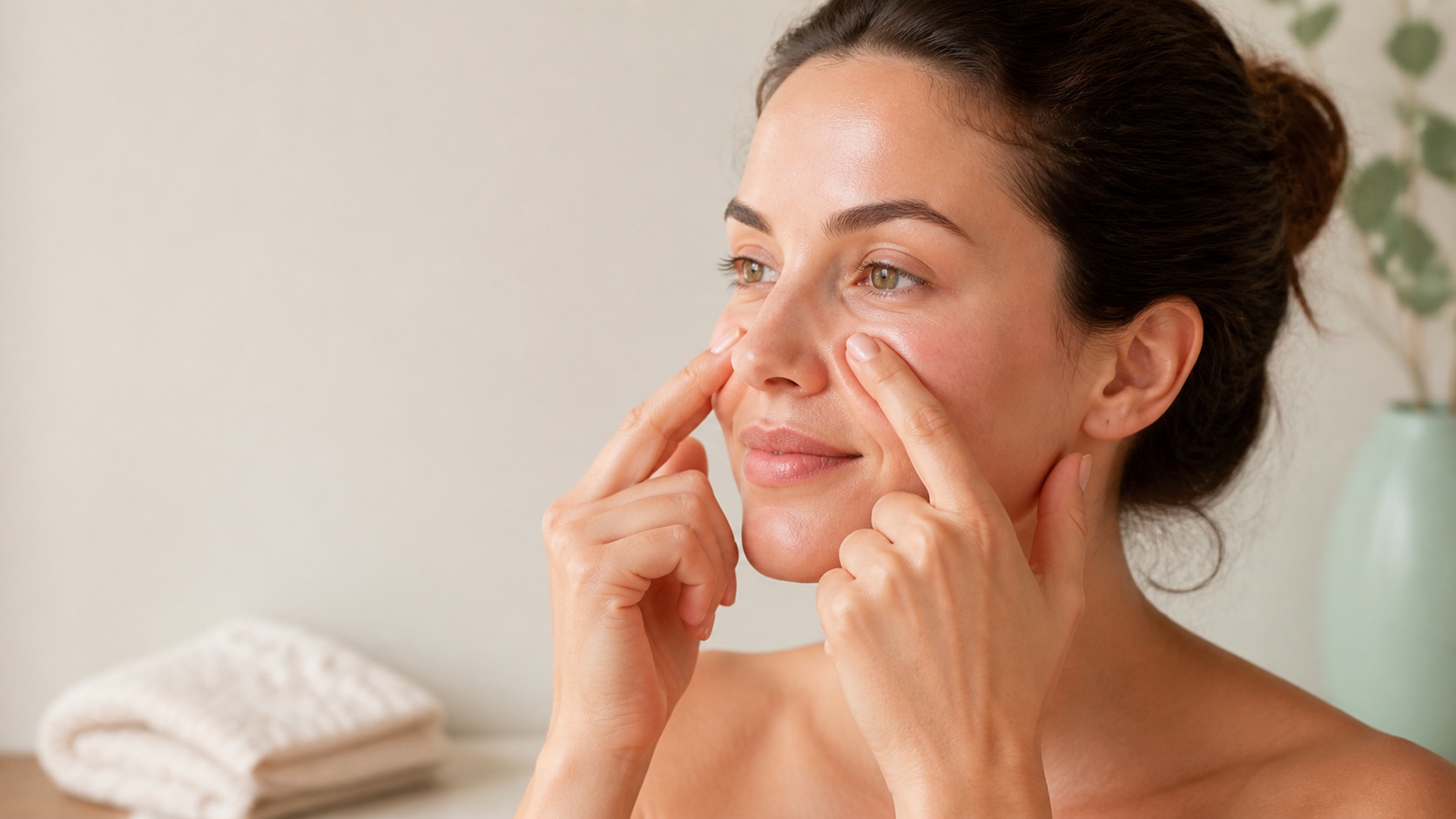
Short answer: A gentle sinus massage may temporarily make mild facial pressure feel more comfortable, but evidence is limited. It has not been shown to clear blocked sinuses, treat an infection, or fix allergies. Use very light pressure and stop if the area is painful, swollen, or becoming worse.
This is an adult self-care routine for mild pressure that comes with an ordinary cold or congestion. It is not a treatment for sinusitis, unexplained facial pain, or swelling. If your skin is irritated, you recently had a facial procedure, or you have another reason to be cautious, read the facial massage safety guide first.
What sinus massage can and cannot do
Your sinuses are air-filled spaces in the bones around your nose, eyes, and forehead. When the tissue lining them becomes inflamed, their openings can narrow and mucus may not drain normally. That can contribute to congestion and a feeling of pressure.
Sinus mucus drains through small openings into the nasal cavity. It does not travel down the superficial lymphatic pathways used in a cosmetic facial lymphatic massage. This routine therefore uses light touch around areas where people commonly feel pressure. It does not mechanically push mucus from the face into lymph nodes in the neck.
| What massage may do | What massage does not do |
|---|---|
| Feel soothing around a tense or tender face | Cure a viral or bacterial infection |
| Temporarily soften the sensation of mild pressure for some people | Treat allergies, nasal polyps, or a structural blockage |
| Help you relax your brow, jaw, and temples | Guarantee that a blocked sinus will drain |
There are no strong clinical studies showing that sinus massage clears congestion. Cleveland Clinic describes it as a gentle comfort measure and emphasizes very light pressure rather than force. Read Cleveland Clinic's sinus massage guidance.
When to skip the massage
Do not keep pressing on a painful face to see whether you can make the pressure release. Seek medical advice if you have:
- Severe headache or severe facial pain
- Redness or swelling around an eye, double vision, or another vision change
- Confusion, a stiff neck, or swelling of the forehead
- Symptoms lasting more than 10 days without improvement
- Symptoms that improve and then become worse again
- Fever lasting longer than three or four days
- Several sinus infections within a year
- Persistent pain mainly on one side, especially with dental pain or swelling
The CDC sinus infection guide recommends medical care for severe symptoms, worsening after initial improvement, symptoms lasting more than 10 days, or a fever lasting longer than three or four days. Eye swelling, confusion, stiff neck, and vision changes can signal a more serious problem and need prompt assessment. See Mayo Clinic's sinusitis warning signs.
Where are the sinuses you can feel pressure around?
The frontal sinuses sit in the lower forehead above the inner eyebrows. The maxillary sinuses sit behind the cheeks, below the eyes and beside the nose. Other sinuses lie deeper in the head and are not something you should try to reach by pressing harder.
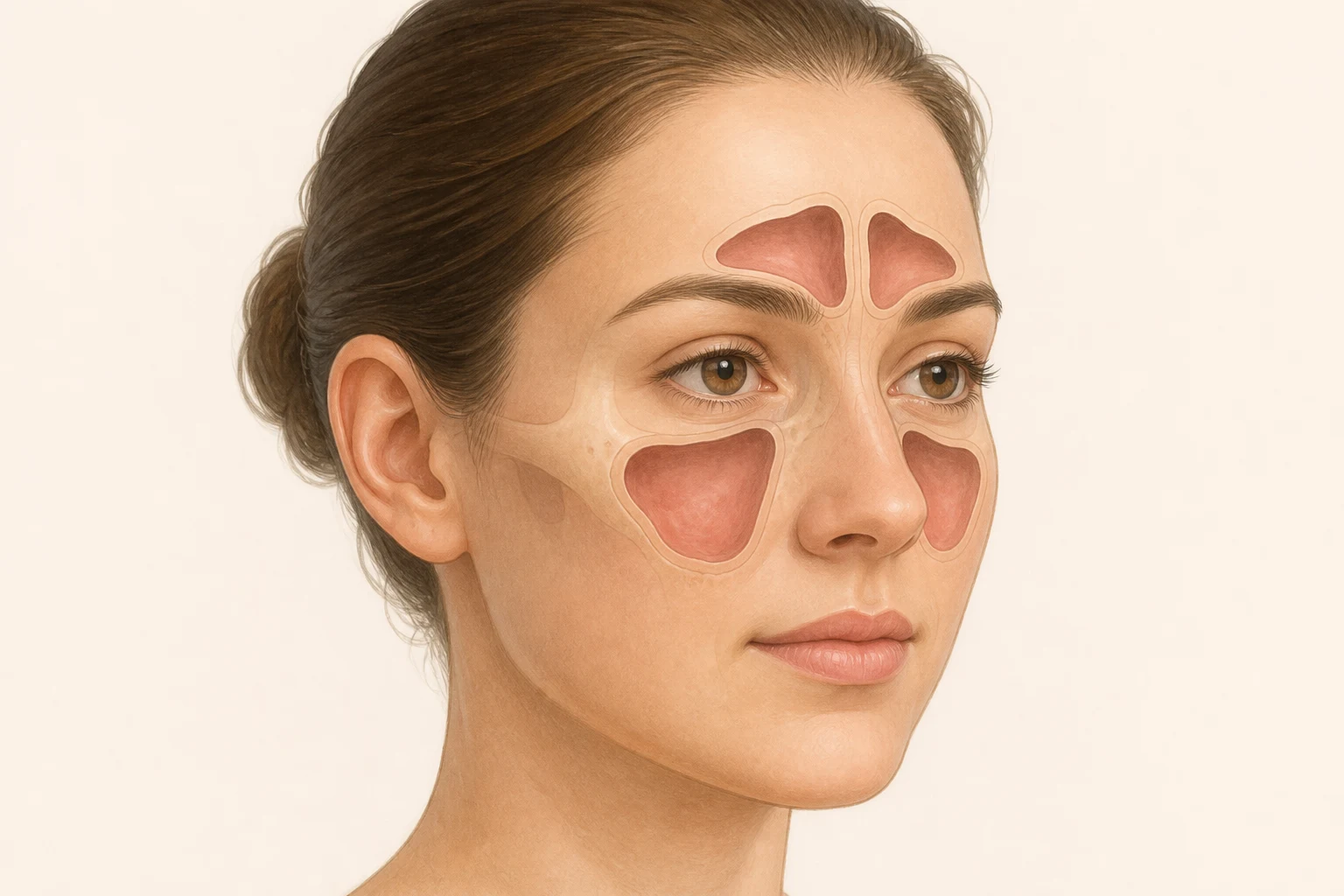
The illustration is a simplified location guide. It does not show a route that massage can physically empty.
A gentle five-minute sinus massage
Wash and dry your hands, then sit somewhere comfortable. Let your shoulders drop and unclench your teeth. You do not need oil for these small holds and movements.
Use only enough pressure to make comfortable contact with the skin. Your fingertips should not dig in, leave dents, or make the pain sharper. Stop if you become dizzy or if the pressure, pain, or swelling increases.
1. Rest your fingers beside your nose
Place the flat pads of your index fingers beside your nostrils. Do not pinch or block your nose. Apply barely-there pressure for five seconds, release completely, and repeat three to five times.
2. Move gently across the upper cheeks
Place two or three flat fingertip pads beside your nose, beneath the cheekbones. Make one or two very small circles, then move gently outward across the cheeks. Repeat three to five times without pressing into tender tissue.
3. Trace the bony rim beneath your eyes
Use one ring fingertip on the bone beneath each eye, not on the soft eyelid and never on the eyeball. Move from the inner under-eye area toward the temple with feather-light contact. Repeat three times.
Skip this step completely if the eye area is swollen, red, painful, or unusually sensitive.
4. Move from the inner brows across the forehead
Place your fingertips above the inner ends of your eyebrows. Sweep slowly outward along the brow and then across the forehead toward the temples. Repeat three to five times. Your eyebrows should not bunch or squash beneath your fingers.
5. Let your temples relax
Rest one or two fingertip pads at each temple and make slow, comfortable circles for 20 seconds. This may ease general facial or headache tension, but temple pain is not specific to a sinus problem.
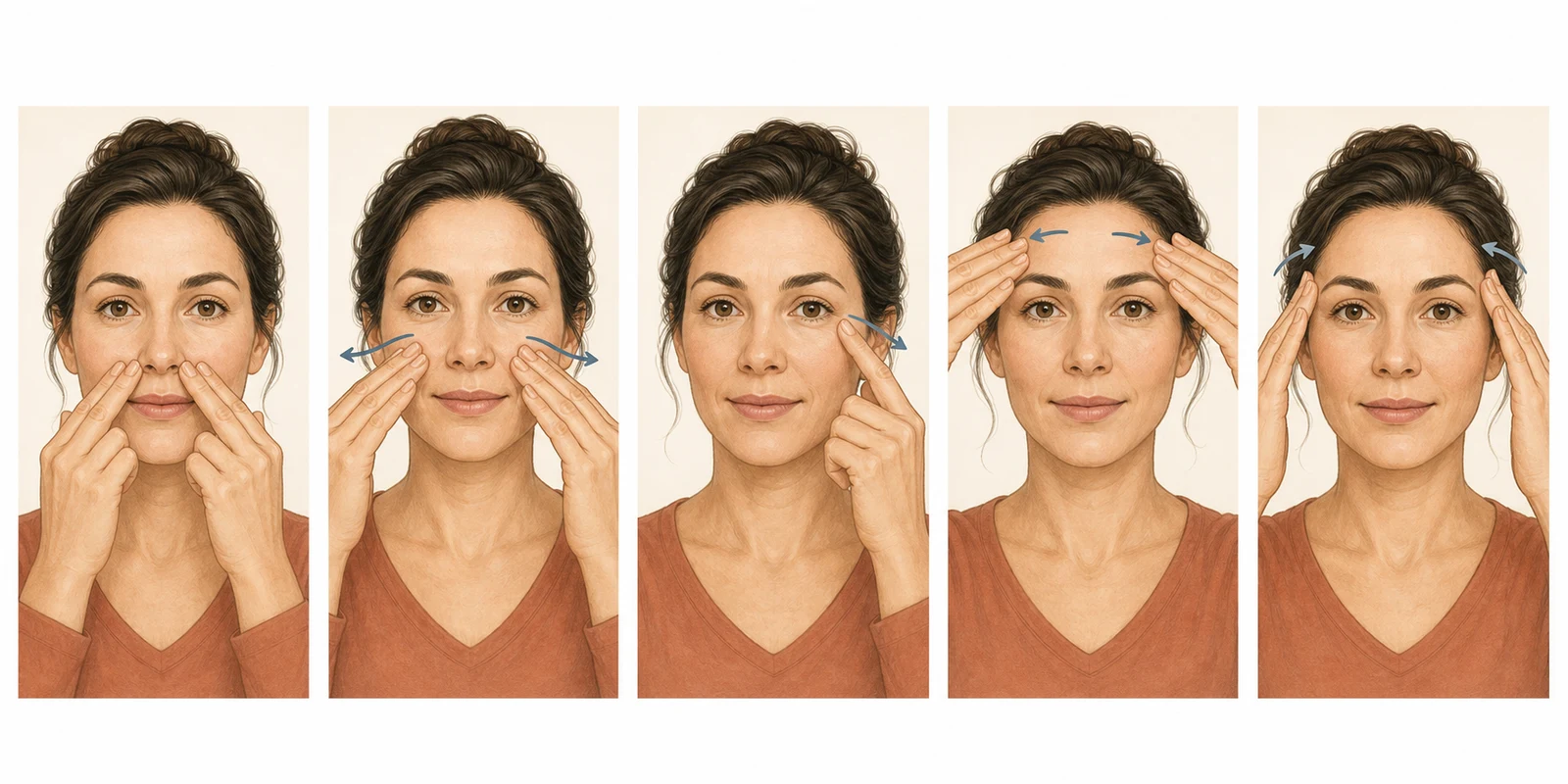
Keep every movement light. The arrows show hand direction, not the movement of mucus or lymphatic fluid.
One careful pass is enough. More pressure and more repetitions do not make the routine more effective.
What else may feel helpful?
A comfortably warm washcloth over the nose and forehead may feel soothing before or after the routine. A warm shower or a clean humidifier is a safer source of moisture than leaning over a bowl of hot water. Bowls of hot water can spill and cause serious scalds. Read the NHS burns warning about steam inhalation.
Evidence for steam, warm face packs, and common congestion remedies in acute sinusitis is limited. NICE found no clinical evidence supporting steam inhalation or warm face packs as treatments, so think of warmth as comfort rather than a cure. Read the NICE evidence review.
Saline nasal spray and some decongestants may be appropriate for certain people, but they are not suitable for everyone. Follow the product directions and ask a pharmacist or healthcare professional if you have a medical condition, take other medicines, are pregnant, or are unsure what is safe for you.
Is it sinus pressure, puffiness, or something else?
Sinus-related discomfort often comes with nasal congestion or discharge and pressure around the cheeks, nose, or forehead. Morning puffiness is more likely to look like mild, even swelling around both eyes or cheeks without nasal symptoms. For that, use the facial massage for puffiness routine.
Facial pain does not always come from the sinuses. Migraine, a dental problem, jaw tension, and other conditions can feel surprisingly similar. Repeated, severe, or one-sided pain deserves assessment rather than a stronger massage.
Sinus massage FAQ
Does sinus massage actually drain your sinuses?
It has not been shown to mechanically drain the sinuses. Very gentle massage may temporarily make mild facial pressure feel more comfortable for some people, but it does not treat the cause of congestion.
Where should you massage for sinus pressure?
Use light contact around the sides of the nose, upper cheeks, bony rim beneath the eyes, inner brows, forehead, and temples. Never press the eyeballs or dig into painful, swollen tissue.
How much pressure should you use?
Use only enough pressure to make comfortable contact with the skin. Your fingers should not leave dents, make your eyebrows bunch, or increase pain. Lighter is safer than harder.
Can sinus massage make pressure worse?
Forceful massage can aggravate tender tissue and may make you feel dizzy or uncomfortable. Stop if pain, pressure, swelling, or dizziness increases.
When should you see a healthcare professional?
Seek care for severe pain, symptoms that worsen after improving, symptoms lasting more than 10 days, a fever lasting longer than three or four days, repeated infections, or concerning eye or neurological symptoms.
A guided routine is coming
Reading each step while your hands are on your face is not exactly relaxing. We are building MyFaceRitual to turn careful facial massage guidance into short routines you can follow without pausing to reread the instructions. Join the MyFaceRitual waitlist to hear when the first guided routines are ready.
Sources and review note
This article is general education, not a diagnosis or a substitute for care from a qualified healthcare professional. It was written using current patient guidance from the CDC, Mayo Clinic, NICE, Cleveland Clinic, and Newcastle Hospitals NHS Foundation Trust.